




7-day winter expedition along the Kungsleden in Swedish Lapland
- 7 nights

(87)
7 nights
King’s Trail
Embark on a winter expedition on the legendary Kungsleden during this 7-day adventure.
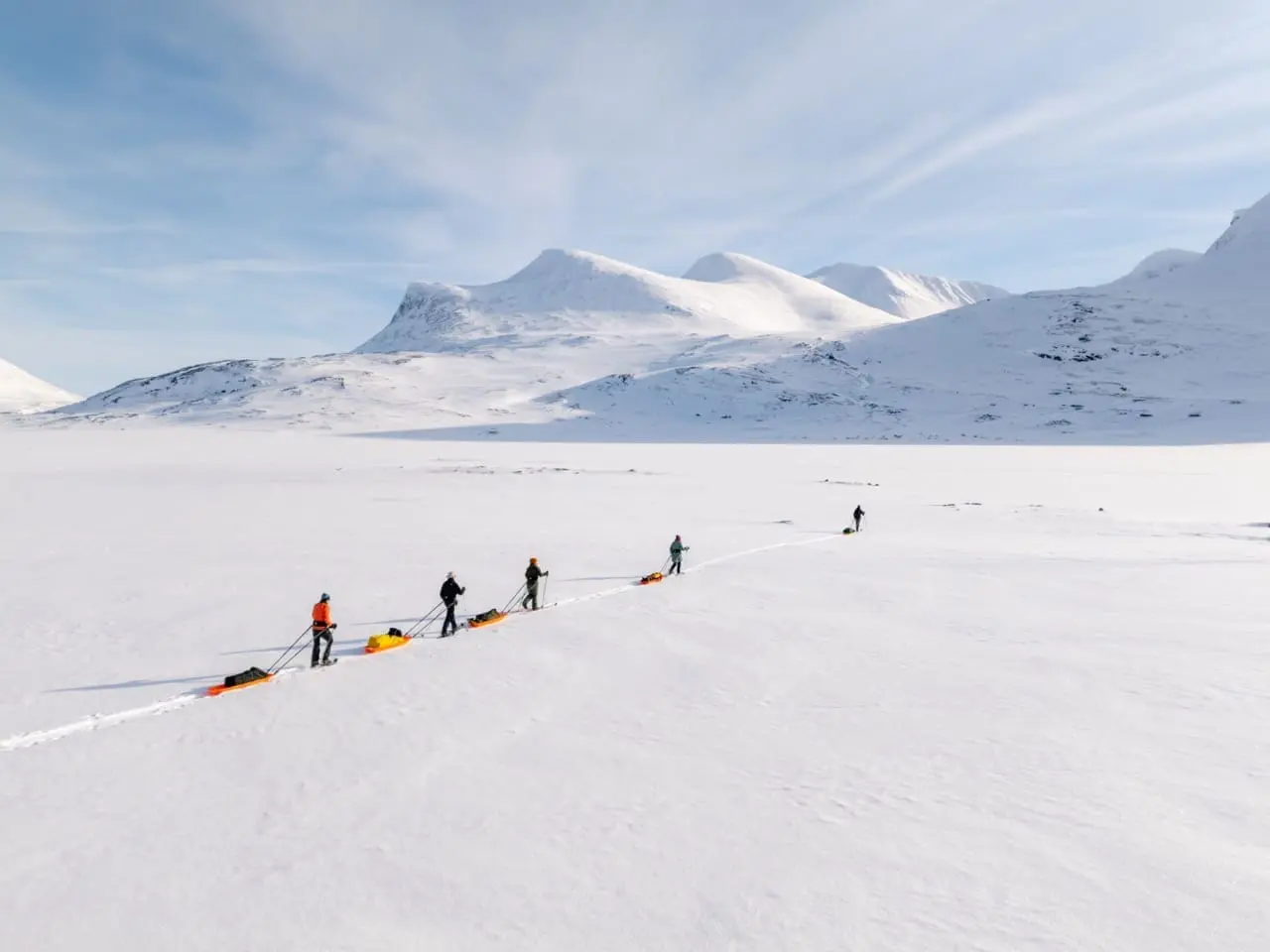


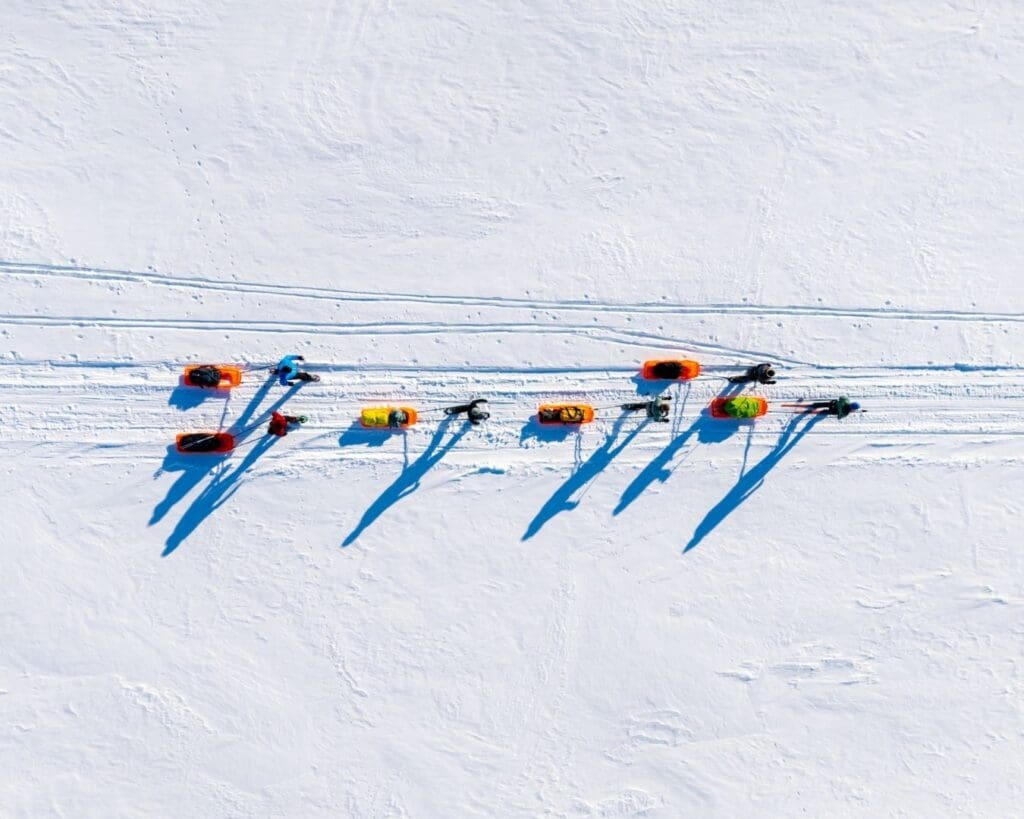
Ready for a unique winter expedition above the Arctic Circle? The King’s Trail (Kungsleden) is Scandinavia’s most iconic hiking route. During this 7-day winter trek through Swedish Lapland, you will travel from hut to hut with a pulka (expedition sled) through a breathtaking snowy landscape. Guided by experienced guides, you will discover the pure arctic wilderness between Abisko and Nikkaluokta, with an excellent chance of spotting the magical Northern Lights.




The Kungsleden
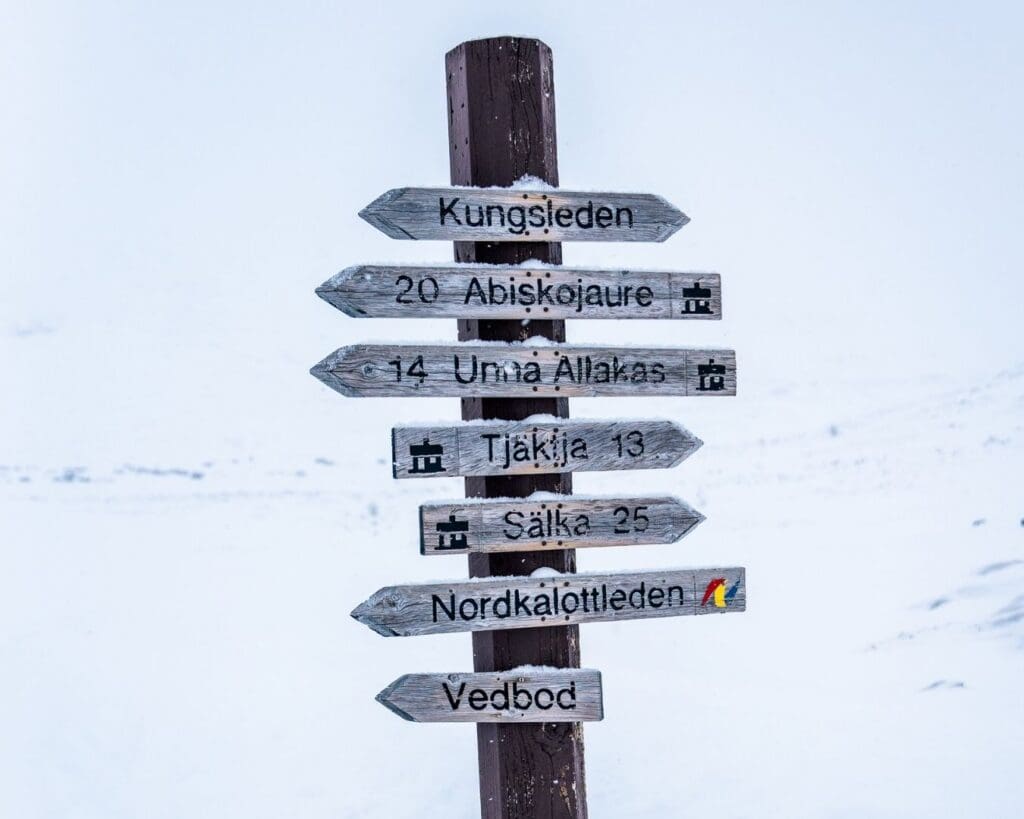
The Kungsleden, or The King’s Trail, is Scandinavia’s most iconic hiking route, and for good reason. The entire trail spans about 425 km, but we start in the northernmost village Abisko, and cover the northernmost 75 km. Located about 200 kilometers north of the Arctic Circle, this is one of the best places in the world to spot the Northern Lights. From Abisko, we trek with our pulkas to the remote Singi hut, taking a total of five days. From there, we embark on an adventurous snowmobile ride to our final destination, Nikkaluokta. This part of the route runs past Sweden’s highest mountain, Kebnekaise (2096m), and is characterized by vast, pearl-white landscapes.


The weekly schedule
Since the Kungsleden isn't always the easiest environment for organizing a winter trail on your own, we've mapped out a complete week program so you can enjoy the best of the Kungsleden in just 5 full hiking days without any worries. The route can, of course, be adjusted by our guides in case of particularly bad weather.
Day 1

Home - Kiruna - Abisko
Abisko Tourist Station
Day 2

Abisko – Abiskojaure
14 km
Day 3

Abiskojaure - Alesjaure
20 km
Day 4

Alesjaure - Tjäktja
16 km
Day 5

Tjäktja – Salka
12.5 km
Day 6

Salka - Singi - Kebnekaise
12 km
Day 7

Kebnekaise - Nikkaluokta
Nikkaluokta
Day 8

Nikkaluokta - Kiruna - Home
Practical information about The King's Trail
In this section, you'll find all the practical information about your trip. If you have any questions, feel free to reach out to us!
Included
-
This price includes:
- Fully planned route and complete travel organization
- Professional guidance by experienced guides
- 5 overnight stays in cozy Swedish mountain cabins and 2 nights in well-equipped mountain stations
- Equipment rental: choose between an adventure on snowshoes or on Nordic skis
- Detailed smartphone app where you can find all the information
- Snowmobile transport from Singi to the endpoint
Optional
-
Round-trip flights from Brussels or Amsterdam: From €430 (incl. 23 kg checked baggage & shuttle transport)
More info can be found here.
-
Round-trip flights from Dusseldorf: From €350 (incl. 23 kg checked baggage & shuttle transport)
(only possible on Saturdays) -
Airport shuttle: € 45 per person/shuttle
(Included in the flight price on Saturday). -
Survival Foodpack: Vegetarian € 115, Standard € 125
(You can find the contents of this foodpack in the FAQs) -
- Hardshell Pants: € 70
- Thermal Gloves: € 28
-
- Cancellation Insurance: € 69
- Travel Insurance: € 49
-
Only for Thursday departures:
Extra night in Kiruna before the trip starts: €65 per person (Night from Wednesday to Thursday, breakfast and pick up at the hotel by our airport shuttle on Thursday included, 4-person rooms)
Stays
-
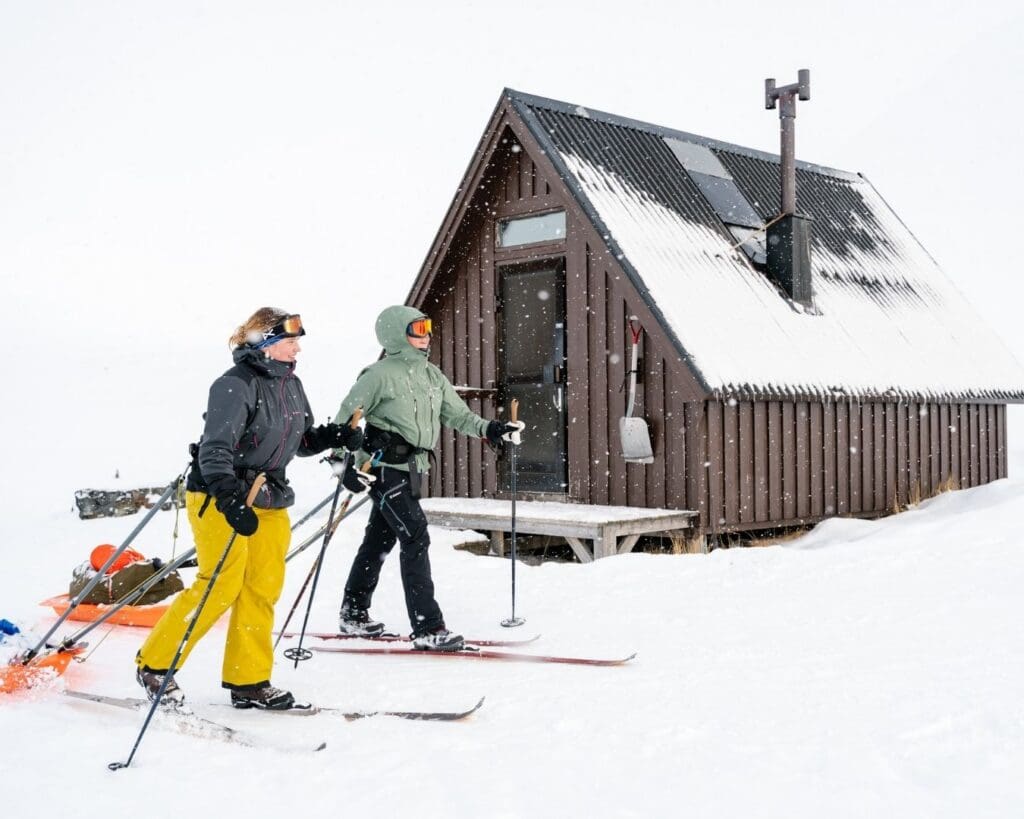
You’ll be sleeping in cozy cabins for a week, right in the wilderness. These cabins are maintained by the Svenska Turist Föreningen.
Some of these cabins have a small shop with basic products. They come equipped with a wood stove to keep you warm, a shared kitchen, sleeping areas with bunk beds, and an emergency phone, since there’s no mobile reception in this area.
In most cases, the cabins have no electricity or running water. So, we get our water from a hole in the ice near the cabins. There’s also always a compost toilet available at the cabins.
Skis or Snowshoes?
-
Nordic Skiing: Just like in the past, Nordic skiing is still the way to trek from hut to hut through deep snow in winter. The difference from regular skis is that you use a type of mountain boot with a metal attachment in the sole (included with the skis), and the skis have much better grip and are longer than normal skis. Since ski hiking can be seen more as ‘gliding through the snow,’ skiing experience is not necessary. It’s a completely different way of moving that anyone can learn in a day.
-
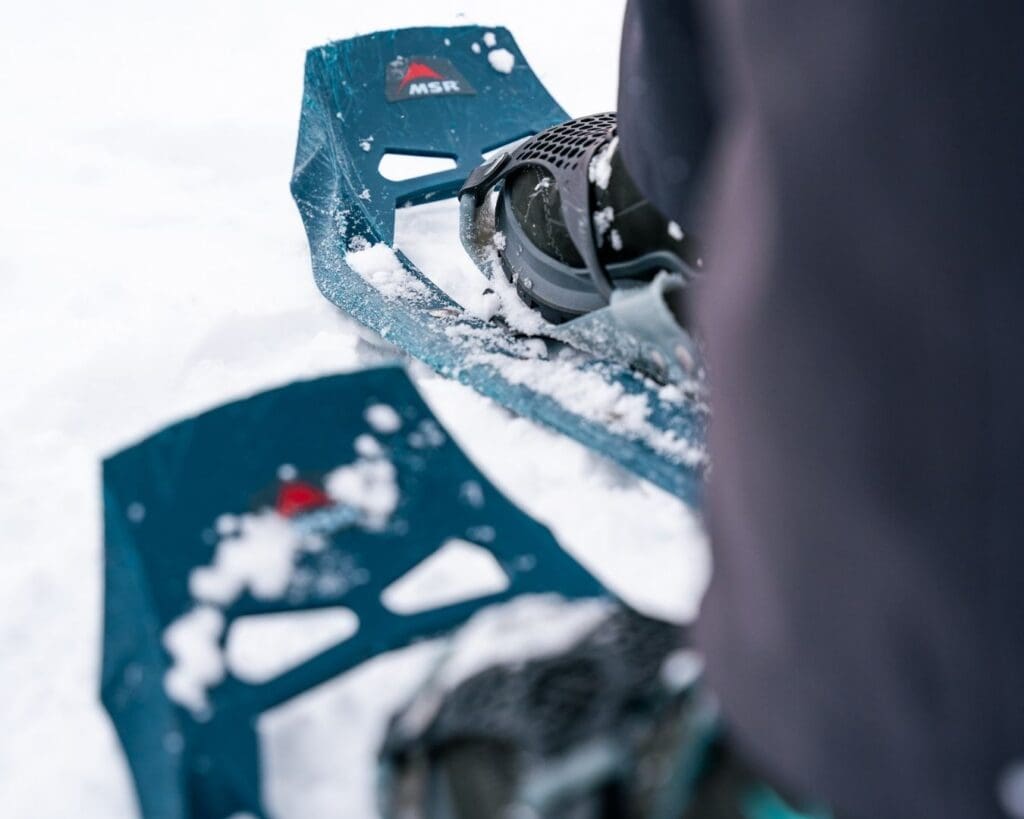
Snowshoeing: Snowshoes are extensions of your own hiking boots or snow boots that make it easier to walk over deep snow. They distribute the weight of the wearer over a larger surface area so that the feet don't sink into the snow due to the reduced pressure.
Our guides
-
Experienced guides are ready to help you if you need assistance or run into difficulties. Every morning, you'll receive a briefing with extra tips and tricks. You can walk at your own pace, but there will always be a guide leading the way and another guide at the rear to support anyone who encounters problems during the trail if needed. If you feel more comfortable with a guide by your side, you can always walk alongside them.
In case of bad weather, they will keep the group together and provide guidance. They also carry a GPS Tracker (including an emergency signal) to alert emergency services.


How do I get there?
❗️Important: try to arrive at Abisko Turiststation by 8:00 PM at the latest❗️
On Saturdays, you can choose to book a direct flight with us from Düsseldorf.
On Thursdays, the flights are less ideal, but you can book a direct flight with us on Wednesdays, as well as a hotel stay in a hotel in Kiruna. The next day, you will be picked up at your hotel to go to Abisko.
Below, we’ll summarize all the options for you.

Flying from Düsseldorf
On Saturdays, you can fly directly with us from Düsseldorf to Kiruna:
Outbound flight:
Take off from Düsseldorf: 14:25
Land in Kiruna: 17:35
The Airport shuttle leaves from the airport at 18:00.
Return flight:
Take off from Kiruna: 18:35
Land in Düsseldorf: 21:35
The Airport shuttle arrives at the airport around 16:30.
Read moreRead less

Flying from Amsterdam
From Amsterdam, you'll typically find flights with a layover in Copenhagen or Stockholm. Unfortunately, most flights on Thursday arrive in Kiruna too late, which is why we offer flights departing on Wednesday that you can combine with an overnight stay in Kiruna.
From Amsterdam, we offer flights on 03/03, 10/03, and 17/03.
Outbound flight:
Departing from Amsterdam: 19:00
Arriving in Kiruna: 23:30.
Upon arrival, you will take a 5-minute taxi ride to the hotel on your own.
The shuttle to Abisko leaves the next day (Thursday) around 16:00 from the hotel (5 min drive from the airport).
Return flight:
Departing from Kiruna: 14:15
Arriving in Amsterdam: 20:40.
The Airport shuttle arrives at the airport around 12:15 on Thursday.
Read moreRead less

Flying from Brussels
From Brussels, you usually find flights with a layover in Copenhagen or Stockholm. Unfortunately, most flights on Thursday arrive in Kiruna too late, so we offer flights that depart on Wednesday, which you can combine with an overnight stay in Kiruna.
From Brussels, we offer flights on 17/02 and 24/02.
Outbound flight:
Take off from Brussels: 11:05 AM
Arrive in Kiruna: 7:40 PM (on 17/02) and 4:55 PM (on 24/02)
Upon arrival, you will take a 5-minute taxi ride to the hotel on your own.
The shuttle to Abisko leaves the next day (Thursday) around 16:00 from the hotel (5 min drive from the airport).
Return flight:
Take off from Kiruna: 11:45 AM
Arrive in Brussels: 6:35 PM.
The Airport shuttle arrives at the airport around 09:30 on Thursday.
Read moreRead less


IS THIS TRAIL SUITABLE FOR ME?
The difficulty level of a winter trail depends on several factors. Based on the elements below, you can assess for yourself whether this expedition is suitable for you. Thanks to the professional guidance of our guides and the comfort of the cozy mountain huts, we make this unique Arctic experience accessible for every adventurer in good shape and a strong dose of perseverance.

DISTANCE AND EFFORT
- The route between Abisko and Kebnekaise is physically challenging, but by maintaining a steady and consistent pace, it's achievable for anyone in good shape.
- The trail covers a serious distance (about 75 km), but the elevation gain is relatively limited and very gradual.
- The most challenging hiking day is usually the stage over the Tjäktja pass, the highest point of the trail at about 1,150 meters, where you'll tackle a short but steeper climb and descent.
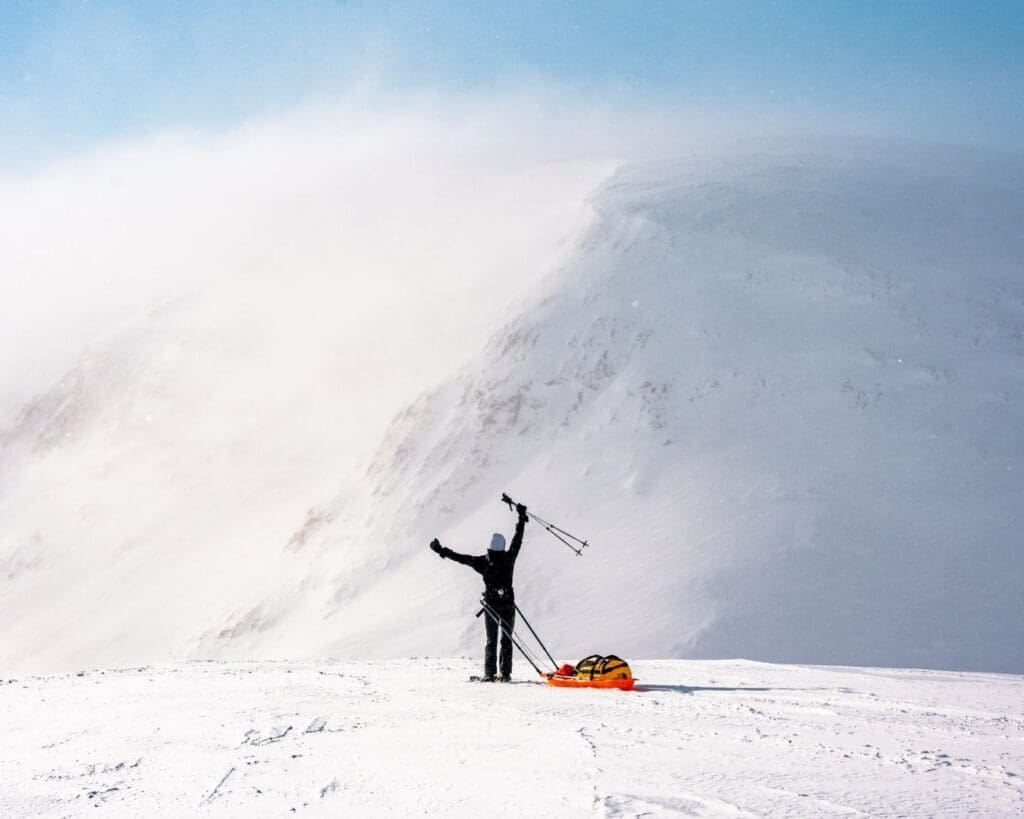
- You won't be carrying a heavy backpack: all personal gear, clothing, and meals are transported in a pulka (expedition sled) that you pull behind you. This primarily requires active physical effort from your core and legs, but it distributes the weight perfectly over the snow, making it feel lighter than a backpack.
Some tips
- Prepare yourself optimally with our targeted training plan; focus on endurance and strengthening your lower back and legs.
- You don't need prior experience with winter expeditions; our guides will teach you all the basic techniques for efficiently moving with a pulka on-site.
- Packing your pulka wisely is key: heavy items should go at the bottom for the best stability while walking.
Read moreRead less

WEATHER CONDITIONS
- The winter in Lapland (above the Arctic Circle) brings real arctic cold; temperatures during this period typically range from -5°C to -25°C.
- The weather can quickly change from a clear blue sky and bright sun to a polar snowstorm with strong winds and minimal visibility.
- Guides continuously monitor the weather and can adjust the day's plans or route based on current conditions. They know the area inside out and consult with local hut wardens to ensure safety as much as possible.
Some tips
- Dress in layers and bring good rain gear (min. water column 15,000 – 20,000 mm). (You can also optionally rent suitable waterproof expedition pants from us).
- Opt for wool (base) layers (like merino wool); this keeps you warm, even when it gets damp or wet.
- Bring a down jacket with at least 650 CUIN to keep warm when you're not moving.
- Ensure you have a high-quality ski goggle for bright sun and to protect your face during blowing snow.
Read moreRead less

TERRAIN AND ACCOMMODATION
- You’ll be walking on Nordic skis or snowshoes through a breathtaking, completely snow-covered winter landscape, across frozen lakes and through vast white valleys.
- You won’t be camping in the freezing cold; instead, you'll stay in authentic Swedish mountain cabins (STF). These don’t have electricity or running water, which gives you a true expedition feel.
Some tips
- Make sure to have well-broken-in, warm, and waterproof winter shoes (suitable for snowshoes).
- Cabin life is all about teamwork: we’ll fetch water together from a hole in the ice, cook together on gas/wood stoves, and keep the cabin warm.
- Stay hydrated on the way. Even though you might not feel thirsty in the cold, your body uses a lot of energy and moisture in the dry freezing air.
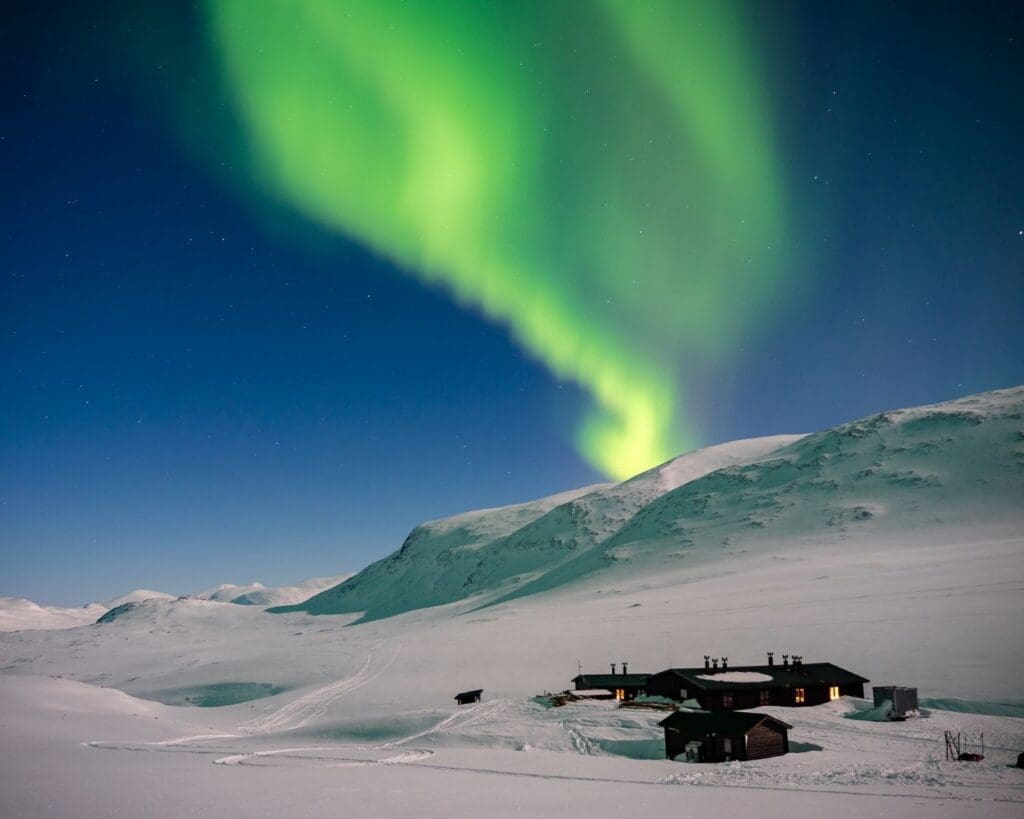
- Look up regularly in the evenings: due to minimal light pollution along the route, there's a great chance you’ll spot the Northern Lights from the cabin.
Read moreRead less
They enjoyed every step:
Join the adventure!
Sign up now for The King’s Trail 2027 using the buttons below:
-
Example tripMonday 20 Jan 2025Sunday 26 Jan 202520 Jan – 26 Jan Mon – Sun · 6 daysAvailable€ 1450Available
-
Example tripMonday 20 Jan 2025Sunday 26 Jan 202520 Jan – 26 Jan Mon – Sun · 6 daysAvailable€ 1450Available
-
Example tripMonday 20 Jan 2025Sunday 26 Jan 202520 Jan – 26 Jan Mon – Sun · 6 daysAvailable€ 1450Available
-
Example tripMonday 20 Jan 2025Sunday 26 Jan 202520 Jan – 26 Jan Mon – Sun · 6 daysAvailable€ 1450Available
-
Example tripMonday 20 Jan 2025Sunday 26 Jan 202520 Jan – 26 Jan Mon – Sun · 6 daysAvailable€ 1450Available
-
Example tripMonday 20 Jan 2025Sunday 26 Jan 202520 Jan – 26 Jan Mon – Sun · 6 daysAvailable€ 1450Available
FAQs
You can always email us for more information about this trip; below you'll find answers to some frequently asked questions.
What’s included in the base price?
This price includes:
- Fully planned route and complete travel organization
- Professional guidance by experienced guides
- 5 overnight stays in cozy Swedish mountain cabins and 2 nights in well-equipped mountain stations
- Equipment rental: choose between an adventure on snowshoes or on Nordic skis
- Detailed Travelbase app where you can find all the information
- Snowmobile transport from Singi to the endpoint
How many kilometers do we hike?
During this week, you’ll cover a total of about 75 km. The number of kilometers per day varies between 12 and 22 km. The days are well balanced in relation to the distance you’ll be covering, taking into account the elevation gain you’ll encounter.
Who is this trip suitable for?
Anyone between the ages of 16 and 65 with good fitness and a sense of adventure can walk this trail. The journey includes a solid amount of physical activity, so being in good health is a must.
Are you looking to try a multi-day hike for the first time, but have doubts about your physical capacity?
Ask yourself the following questions:
- How often have I been physically active in the past three months?
- What types of physical activity do I regularly do, and for how long?
- Have I had any recent injuries that could affect my ability to enjoy this adventure?
- Can I comfortably walk 15 kilometers over hilly terrain?
- Can I train in the coming months to prepare myself optimally for this adventure?
If your answers give you full confidence to embark on this adventure, then this trail is definitely for you! You’ll receive a training schedule a week after booking to get you ready to tackle the path comfortably.
Still unsure and want to test yourself before heading out on the trail?
Try one of our micro-adventures like The Vosges Trail, The Mullerthal Trail, or The Packraft Trail.
Is there on-site support?
On each departure day, a team of experienced guides who know the trail very well and have chosen the beautiful routes and accommodations will join. They will also be there for support in case any issues arise during the trail itself.
What should I bring?
After your booking, you will receive a detailed packing list, carefully compiled by our experienced team. The packing list includes everything you need for your adventure, from clothing to equipment and useful extras.
Curious about other travel experiences? Or would you like to join our community?
Join our Facebook group, where all the Travelbase Trailers from the past years share their love for hiking, handy tips, and experiences.
Footprint score
To be as transparant as possible about our impact, a footprint score has been calculated for each of our trips. There are six badges, each representing a criterion of environmental or social sustainability.

Footprint level